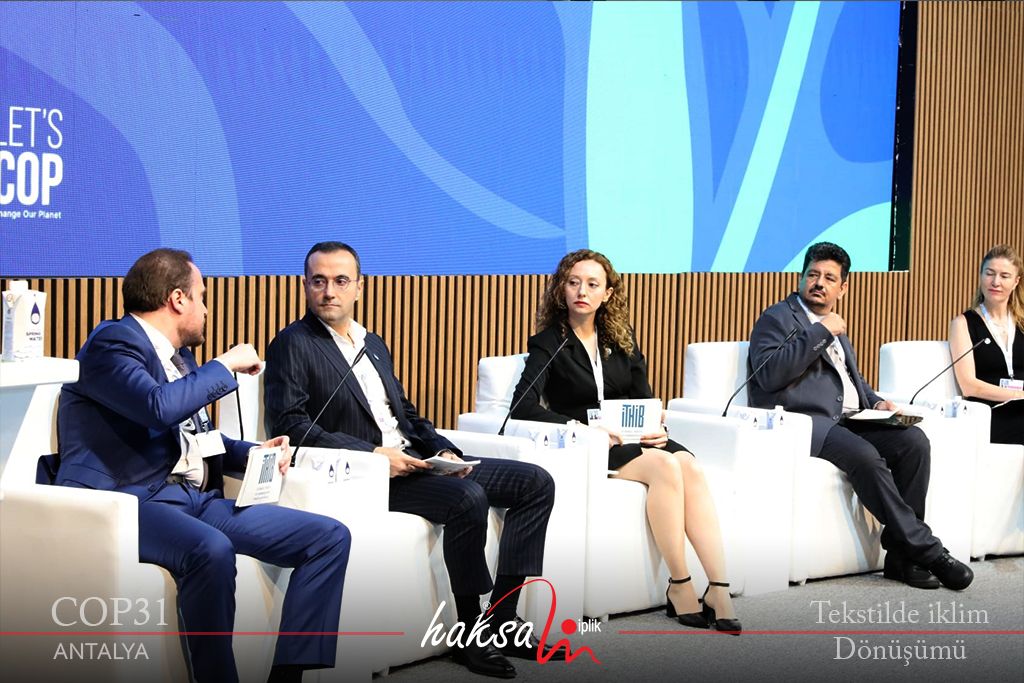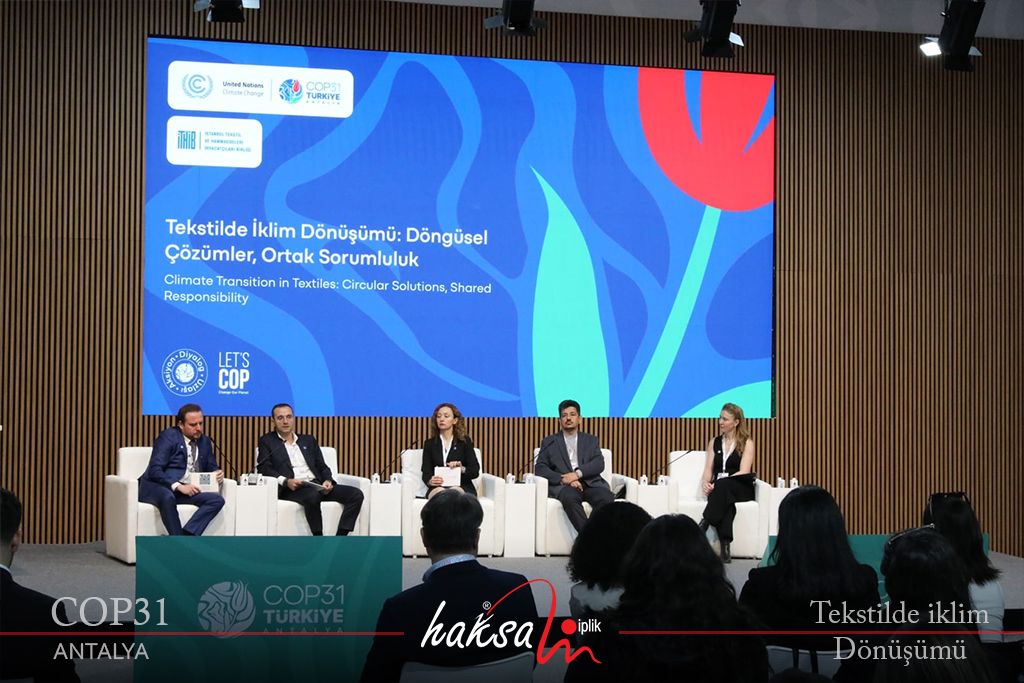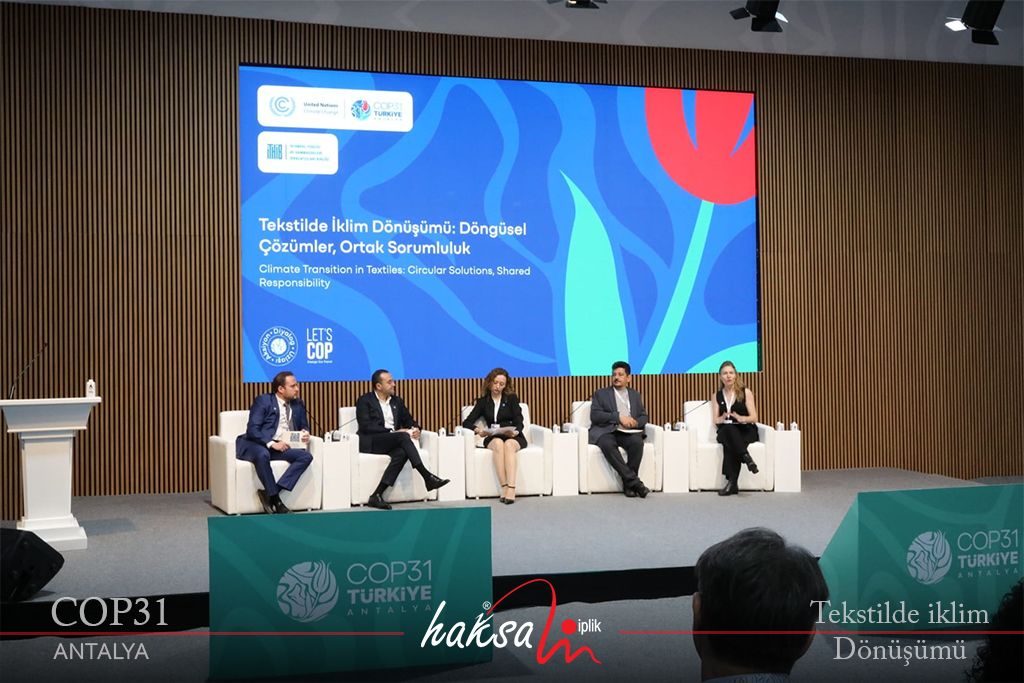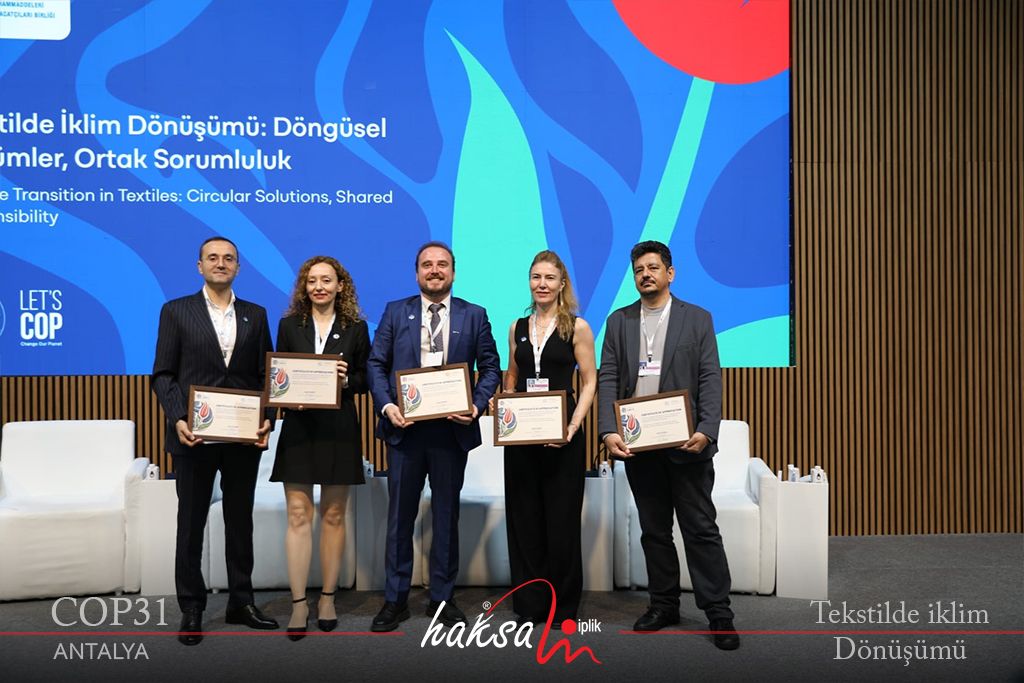

Haksa Tekstil at COP31 Antalya.
Serdar Sağıroğlu, Chairman of our Board, spoke about our 40 years of recycling on the Climate Transition in Textiles panel.

- Panel
- Climate Transition in Textiles: Circular Solutions, Shared Responsibility
- Thematic day
- Science, Industry and Technology
- Date
- 16 November 2026, 11:15–12:00
- Venue
- COP31 Green Zone, Antalya
- Speaker
- Serdar Sağıroğlu, Chairman of the Board
The UN Climate Change Conference, COP31, met in Antalya from 9 to 20 November 2026, hosted by Türkiye.
On the Climate Transition in Textiles panel of the Science, Industry and Technology Thematic Day, Haksa was represented by Serdar Sağıroğlu, Chairman of our Board. Only 7.6 per cent of the world’s fibre comes from recycled sources, and less than 1 per cent goes from textile waste back into textiles. The problem is not recycling capacity but collecting waste, sorting it properly and turning it back into value.
For Haksa, circularity is not a theory but 40 years of production practice in Uşak, since 1986.
Our talk at the panel.
The video starts where Serdar Sağıroğlu's talk begins. The panel is in Turkish.
Haksa in numbers.
Fibre and yarn made by mechanical recycling, with no dyes or chemicals.
Calculated with the Sustainability Centre of the Uşak Chamber of Commerce and Industry.
About half of our energy comes from our own solar plant, built in 2021.
We sort waste by colour, so our products need no dyeing.
The Haksa Model.
Forty years, in four words.
Sort
We sort waste by fibre content and colour, so no dye is needed and we use no water or chemicals for it.
Preserve
With mechanical processes that keep the fibre's value, and with automation, we turn waste into quality yarn and fabric.
Measure
We measure energy, carbon and the quality of every incoming batch of waste, and turn it into traceable data.
Share
We work with brands, suppliers and research partners, because no one closes the loop alone.
The road to the Haksa Model.
- 1986
In Uşak we began turning wool waste back into Streichgarn yarn. Textile waste is a raw material.
- 1994
We moved to recycled acrylic yarn and invested in open-end spinning.
- 1997
We began recycling cotton; 100 per cent recycled cotton fibre drove our exports.
- 2013
We began knitting our recycled yarns into fabric in our own mill.
- 2020
Full automation in recycling and spinning: the same measurable quality in every batch.
- 2021
Our solar plant now supplies about half of the energy we use.
- 2023
We began work on the Digital Product Passport, showing which waste and which processes each product came from.
- 2024
We set up our sustainability department to measure our carbon and water footprints and share them with partners.
- 2025
We began growing drought-resistant outdoor ornamental plants, taking sustainability into the soil.
Giving back to nature.
In 2025 we took sustainability beyond the factory and into the soil. We grow drought-resistant outdoor ornamental plants for landscaping and green spaces, giving cities more room to breathe.
Recycling reduces waste, the sun cleans our energy, and plants give back to nature. We aim to measure this investment’s environmental contribution scientifically and make it a measurable part of our carbon journey.
Drought-resistant outdoor ornamental plants we grow.
The number of plants we aim to reach.
From the panel.
Uşak, a natural Re-Hub
Every link of the chain is in Uşak, from sorting waste and opening fibre to spinning, knitting, weaving and blankets. More than 300 firms in the city recycle; about 1,950 tonnes of textile waste are processed each day, and about 72 per cent of Türkiye’s textile recycling happens here.
What we ask of brands: lead the cluster and commit to long-term purchasing, allow reasonable tolerances in fibre content and colour, and decide product construction together with recyclers.
Data forward, waste back
With every batch of yarn we give fabric makers the waste’s source, type and condition, fibre content, production parameters, lab results, energy use and carbon footprint. When the Digital Product Passport becomes mandatory in the EU, this data will be the basis of the brands’ own passports.
In return we ask our customers to send us their production waste and surplus stock, which we recycle back into production. That is how the loop closes.
Photos from the panel.